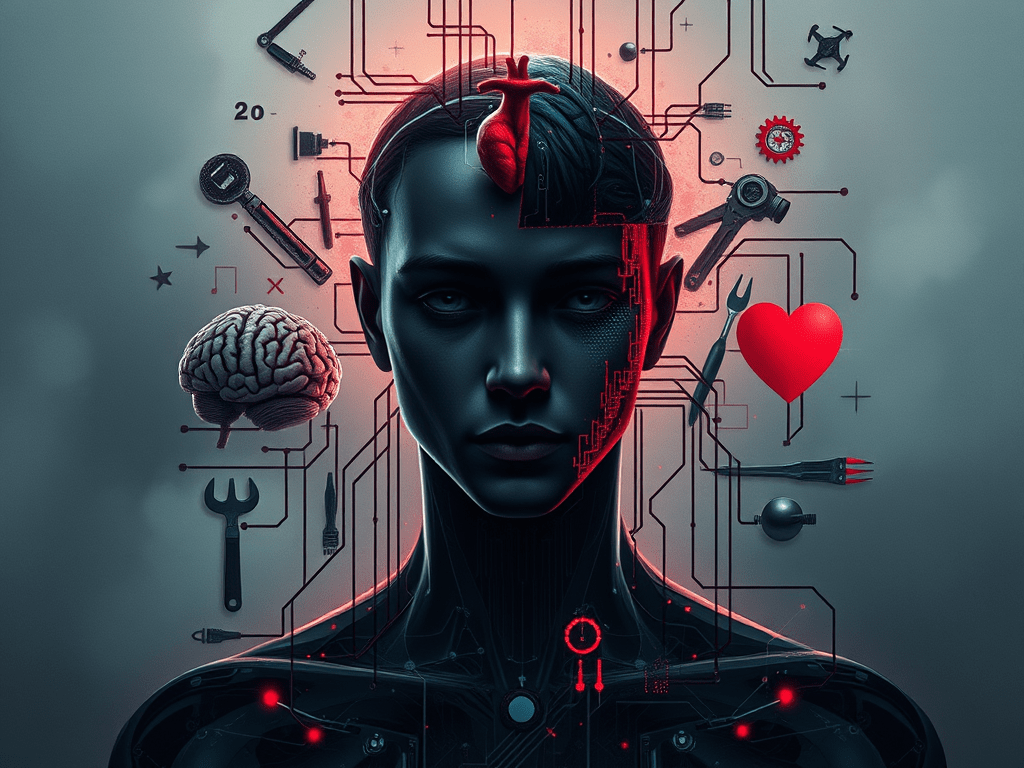
Artificial intelligence offers incredible potential. However, it also presents a subtle but significant threat. This threat is the gradual erosion of our natural human capabilities. As AI takes over tasks we once performed ourselves, we risk losing the very skills and strengths that define us. This isn’t about a sudden, catastrophic takeover, but a slow, insidious decline.
Cognitive Capabilities:
- Critical Thinking and Problem Solving: Constantly relying on AI for information and decision-making can weaken our own critical thinking skills. If algorithms always provide the answers, we become less adept at analyzing problems, evaluating evidence, and forming our own conclusions. We risk becoming passive recipients of information rather than active thinkers.
- A study by Microsoft and Carnegie Mellon University found that employees using AI tools like Copilot and ChatGPT experienced a “deterioration of cognitive faculties.” Employees using these tools faced cognitive decline. This happened due to their over-reliance on these applications. Their independent problem-solving skills diminished.
- Imagine a young professional named Alex who relies heavily on AI tools for work. Over time, Alex notices that when faced with a problem without AI assistance, they struggle to come up with solutions independently. This reliance on AI has made Alex less confident in their own problem-solving abilities, leading to frustration and a sense of inadequacy.
- Memory and Learning: AI tools are becoming better at storing and retrieving information. As a result, our own memory and learning abilities may suffer. Why bother memorizing facts when a search engine can provide them instantly? This dependence could lead to a decline in our ability to learn. It could affect our ability to retain information. This, in turn, could hinder our cognitive flexibility and adaptability.
- Research indicates that reliance on digital tools like search engines and GPS can impair our memory and learning abilities. For example, people who frequently use GPS devices tend to have worse recall of routes compared to those who navigate without them.
- Consider a student, Priya, who uses AI-powered study aids for all her exams. While she excels in tests, she realizes that she can’t recall information without these tools. During a group discussion, Priya feels embarrassed when she can’t contribute meaningfully because she hasn’t retained the knowledge.
- Creativity and Innovation: While AI can be a tool for creativity, over-reliance on it might stifle our own creative impulses. If AI generates the ideas, we may become less likely to explore our own imaginations and develop original thoughts. This could lead to a decline in human innovation and a homogenization of ideas.
- While AI can augment creativity, there’s concern that over-reliance on AI-generated content might stifle human creativity. Generative AI can produce a flood of cheap content. This may drive out human creatives. It could also lead to a homogenization of ideas.
Physical Capabilities:
- Manual Skills and Dexterity: Automation driven by AI is replacing human labor in many industries. While this can increase efficiency, it also reduces opportunities for humans to develop and maintain manual skills and dexterity. We risk losing the ability to perform intricate tasks, from repairing a machine to creating a work of art.
- Physical Strength and Endurance: AI-powered robots are taking over physically demanding jobs. Consequently, we rely less on our own physical strength and endurance. This could lead to a decline in our physical fitness and an increased susceptibility to health problems.
- Sensory Perception: AI-powered sensors can often outperform human senses in terms of accuracy and sensitivity. This reliance on technology could diminish our own sensory awareness and our ability to perceive the world around us.
Social and Emotional Capabilities:
- Social Interaction and Communication: As we increasingly interact with AI chatbots and virtual assistants, our social skills may suffer. Our ability to communicate effectively with other humans might also decline. We risk losing the nuances of human interaction, such as empathy, body language, and emotional intelligence.
- AI chatbots and virtual assistants are changing the way we communicate. Studies have shown that AI can increase communication efficiency. However, it may also lead to a decline in our social skills. AI can affect the nuances of human interaction.
- Picture a teenager, Maya, who spends most of her time interacting with AI chatbots and virtual assistants. When Maya attends a social event, she feels anxious and struggles to engage in conversations. The lack of human interaction has made her feel isolated and less confident in her social skills.
- Emotional Regulation and Resilience: Navigating the complexities of human relationships and managing emotions are essential skills for mental well-being. If AI takes over many of our social interactions, we may become less adept at developing these skills. This could lead to increased anxiety, depression, and social isolation.
- Consider an individual, John, who uses AI-driven mental health apps to manage stress. While these tools provide immediate relief, John realizes that he hasn’t developed the skills to cope with emotions independently. During a challenging situation, John feels overwhelmed and unable to regulate his emotions effectively.
The Long-Term Implications:
The gradual erosion of our natural capabilities has profound implications for the future of humanity. We risk becoming overly dependent on AI, losing our autonomy and control over our own lives. We may become less adaptable, less resilient, and less capable of solving the complex challenges that face us.
A Call for Balance:
It’s crucial to find a balance between embracing the benefits of AI and preserving our own human capabilities. We need to:
- Promote Education and Training: Education systems should focus on developing critical thinking, problem-solving, and creativity skills. This ensures that humans remain competitive in a world increasingly influenced by AI.
- Encourage Physical Activity and Skill Development: We need to create opportunities for people to engage in physical activities. It’s important to develop manual skills, even in an automated world.
- Foster Human Connection and Social Interaction: We must prioritize human connection and social interaction. It is essential to ensure that technology enhances our relationships with others. Technology should not replace these relationships.
- Embrace Lifelong Learning: We need to embrace lifelong learning. We must continuously adapt and acquire new skills. This is essential to remain relevant in a rapidly changing world.
Hypothetical Scenario:
Imagine a future where AI is deeply integrated into our daily lives. Sarah, a software engineer, uses AI tools to automate coding tasks, allowing her to focus on designing innovative solutions. However, she ensures that she regularly engages in coding challenges to keep her problem-solving skills sharp. Meanwhile, her friend, Mark, a doctor, uses AI to assist in diagnosing patients. He continues to rely on his medical expertise and intuition to make final decisions.
Conclusion
While AI offers numerous benefits, it’s essential to strike a balance between leveraging its advantages and preserving our human capabilities. By promoting education, encouraging physical activity, fostering human connection, and embracing lifelong learning, we can ensure that AI serves humanity while enhancing our natural strengths.
The future of humanity depends on our ability to preserve and enhance our natural capabilities. We must recognize the potential risks. By taking proactive steps, we can ensure that AI serves humanity, not the other way around. Let’s strive for a future where technology complements our human strengths, rather than diminishing them.
 Tech Spices
Leave a comment